
Places to Visit in Ubud: 20 Easy Wins (+ Tips, Where to Stay & 1–3 Day Itineraries)
Ubud is Bali’s chill cultural heart—rice terraces, jungle walks, sacred temples, art museums, waterfalls, yoga, and great cafés. This is a text-only guide you can scan fast: what to see, when to go, how long to stay, where to sleep, and simple routes that actually work.
Quick summary
- Best time of day: sunrise–10:00 and 16:00–18:00 (cooler, softer light, fewer crowds).
- Getting around: walk in central Ubud; rent scooter or car for outer areas; expect narrow lanes.
- Temple etiquette: modest clothing; sarong and sash are standard; follow signs and staff.
- Money: some stalls are cash-only; carry small bills; ATMs cluster near main roads/markets.
- Safety: keep shiny items tucked near monkeys; mind wet stone and waterfall steps.
Places to Visit in Ubud (Top 20)
Ordered for easy logistics and popularity. Each item includes why it’s worth it, a realistic time plan, and practical notes.
1) Sacred Monkey Forest Sanctuary
Plan: 60–90 minutes; go early morning for calmer paths.
Good to know: zip your bag; no hand-feeding; follow staff guidance.
2) Tegalalang Rice Terrace
Plan: 45–90 minutes; best before 09:30 or near sunset.
Note: some trails request small local donations; light shoes help.
3) Campuhan Ridge Walk
Plan: 45–75 minutes round trip; sunrise or late afternoon.
Trail: paved with gentle inclines; limited shade—bring a cap and water.
4) Ubud Palace (Puri Saren Agung)
Plan: 20–40 minutes for photos; check on-site for show schedules.
5) Ubud Art Market
Plan: 45–90 minutes; mornings are calmer with more choice.
Tip: bargain kindly; a smile goes a long way.
6) Saraswati Temple (Pura Taman Saraswati)
Plan: 20–30 minutes; dress modestly.
Photo note: frame the gate across the lotus pond for depth.
7) Goa Gajah (Elephant Cave)
Plan: 45–60 minutes; steps down to the complex.
Etiquette: sarong required; usually provided on site.
8) Tirta Empul (Tampaksiring)
Plan: 60–90 minutes; expect to get wet; bring a change of clothes.
Note: separate sarong for water and dry area.
9) Tegenungan Waterfall
Plan: 60–90 minutes; many steps; softer light early.
10) Kanto Lampo Waterfall
Plan: 45–60 minutes; water shoes help on slick rocks.
11) Blanco Renaissance Museum
Plan: 45–75 minutes; pairs well with Campuhan Ridge.
12) Neka Art Museum
Plan: 60–90 minutes; quiet galleries and some AC areas.
13) Pura Dalem Ubud
Plan: 20–40 minutes; modest clothing recommended.
14) Bali Swing (various operators)
Plan: 30–60 minutes; best light in the morning.
Safety: use harness properly; follow staff instructions.
15) Ayung River Rafting
Plan: 2–3 hours including transfers and safety briefing.
Bring: dry bag and strapped sandals.
16) Yoga & Wellness Studios
Plan: 60–90 minutes per class; arrive a bit early to settle.
17) Balinese Cooking Class
Plan: 3–4 hours; morning sessions pair nicely with terraces afterward.
18) Subak Rice Walks
Plan: 30–60 minutes; stay on paths and respect crops.
19) Small Galleries & Craft Villages
Plan: 2–4 hours if you enjoy browsing and chatting.
20) Scenic Cafés & Jungle Views
Plan: 45–90 minutes; plenty of vegetarian and vegan menus.
Where to Stay in Ubud (Areas & Vibes)
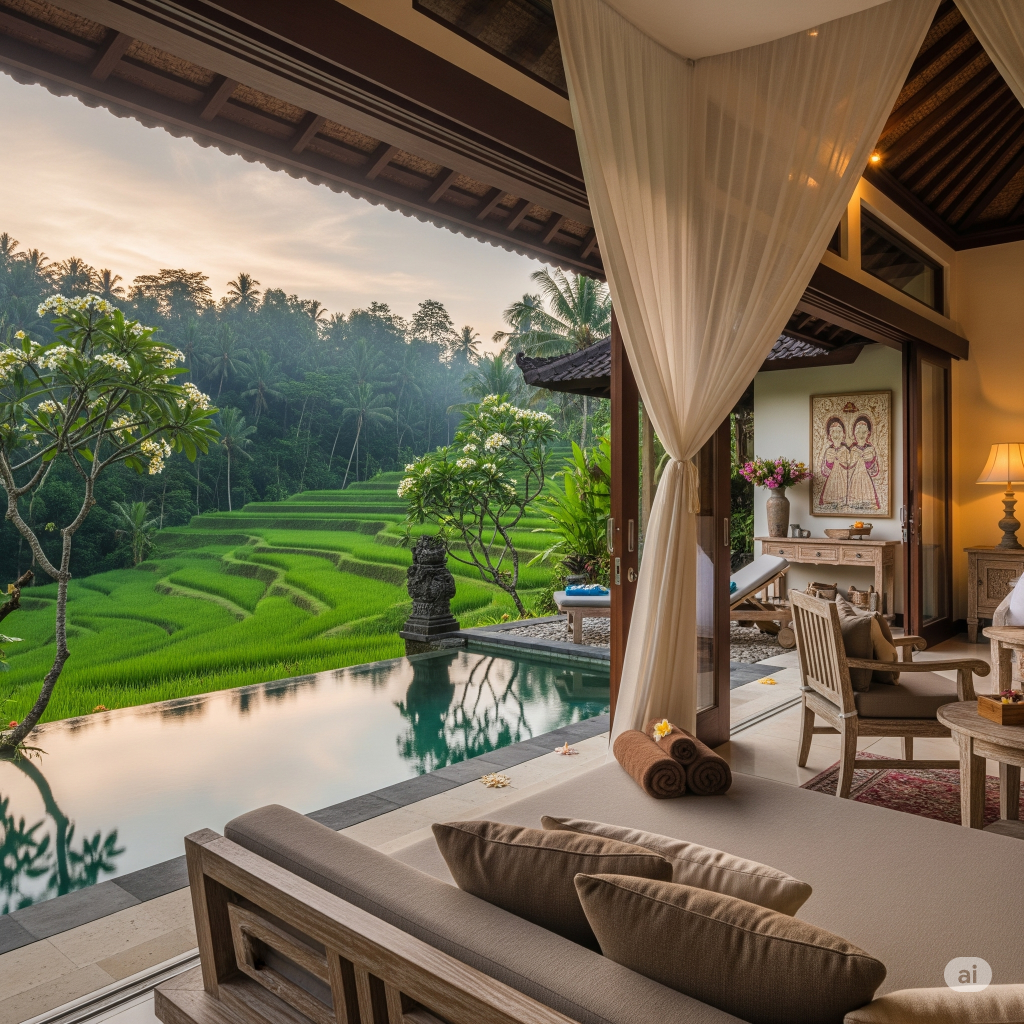
Short version: first-timers who like walking should pick a central location. If you want jungle views and quiet mornings, choose a ridge or rice-field lane on the edge of town. Families often like tidy village areas with sidewalks.
Central Ubud — walk-to-everything
For: first-timers, short stays, food lovers. Pros: zero commute to palace/market/temples; tons of cafés. Trade-offs: busier streets; limited jungle views.
Penestanan & Campuhan Ridges — leafy & artsy
For: couples, art lovers, slow travelers. Pros: calmer lanes, ravine outlooks. Trade-offs: some uphill walking; steps to access villas.
Nyuh Kuning — quiet village vibe
For: families, wellness stays. Pros: tidy streets, easy footpaths, walkable to Monkey Forest. Trade-offs: ~15–20 minutes’ walk to palace/market.
Tegalalang & Northern Ridges — views first
For: photographers, honeymooners. Pros: dramatic terrace/jungle scenes; quiet nights. Trade-offs: scooter/car needed; 20–30 minutes to center.
Very rough nightly budgets: Budget 15–35 USD • Mid-range 40–120 USD • Luxe 150–500+ USD (seasonal swings apply).
Best Time to Visit Ubud — Month by Month
Ubud is a year-round destination. Drier months are roughly April–October; rains are more frequent November–March, often in short bursts. For emerald rice fields, visit right after rains in the morning or late afternoon.
January
Rainy and cool mornings; fewer crowds; waterfalls are strong—watch for slick steps.
February
Similar to January; bring a light rain jacket and quick-dry clothing.
March
Transition month; very green landscapes; occasional showers.
April
Drying trend starts; comfortable temps; great for ridge walks and temples.
May
Generally dry and bright; fantastic for day trips and terraces.
June
Dry with cooler evenings; popular period—book stays early.
July
Peak season; start activities early to avoid crowds and midday heat.
August
Dry and sunny; golden light at sunrise and sunset.
September
Still pleasant; slightly fewer visitors after mid-month.
October
Warmer afternoons; first pre-monsoon showers possible.
November
More showers, greener paddies; dramatic sunsets after rain.
December
Festive season; showers likely; book activities and dinners ahead.
Itineraries You Can Actually Do
1 Day in Ubud (busy but doable)
- Sunrise: Campuhan Ridge Walk → coffee/breakfast nearby.
- Late morning: Ubud Palace + Ubud Art Market.
- Lunch: central Ubud café.
- Early afternoon: Monkey Forest.
- Late afternoon: Tegalalang Rice Terrace.
- Evening: traditional dance performance (check on site for schedule).
2 Days in Ubud (chill & balanced)
Day 1: Palace → Market → Saraswati Temple → lunch → Monkey Forest → sunset Campuhan.
Day 2: Tegalalang sunrise → choose 1–2: Goa Gajah / Tirta Empul / Tegenungan → late afternoon museum (Blanco or Neka) or a yoga class.
3 Days in Ubud (slow travel)
- Day 1: Central highlights + Campuhan sunset.
- Day 2: Tegalalang + temple/waterfall combo + spa in the evening.
- Day 3: Cooking class + craft villages + easy rice walk + relaxed café stop.
Smart Tips for Ubud
- Beat the heat: start early; carry water; use sunscreen even on cloudy days.
- Dress code: temples require modest clothing; sarongs usually available on site.
- Footwear: grippy sandals/shoes for wet stone and waterfall steps.
- Respect: don’t touch offerings; step around them; don’t feed monkeys.
- Timing: early/mid-morning light is kind; after rain the terraces look extra vivid.
- Logistics: peak months need advance booking for stays and popular activities.
FAQ
When is the best overall time to visit Ubud?
Is Ubud good for kids?
Do I need a guide?
Are there entrance fees?
What should I wear at temples?
Leave a Reply